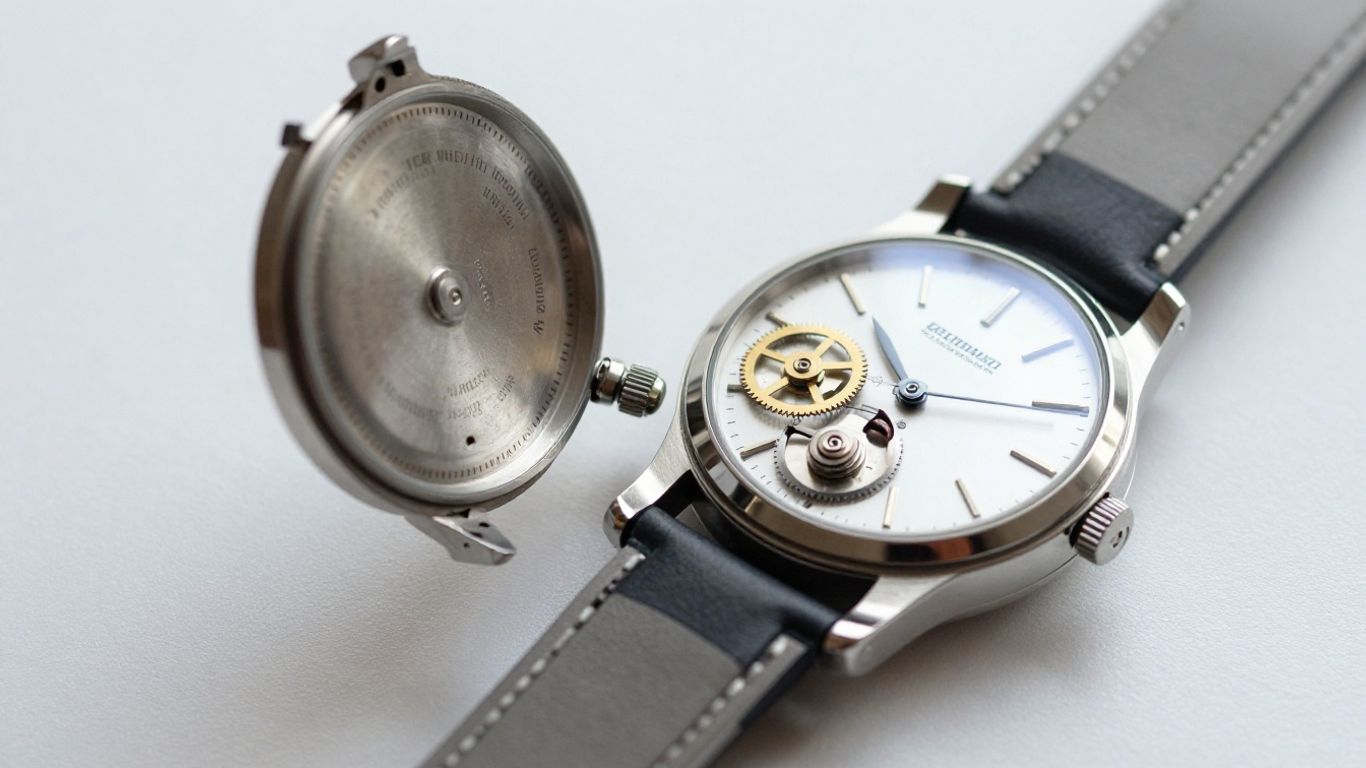
Key Takeaways
A watch movement is the mechanism that keeps time and drives the hands. Knowing the basic differences can help you choose a watch that suits how you wear it.
- Quartz movements use a battery and vibrating quartz crystal to keep time.
- Mechanical movements store energy in a mainspring and release it through a regulated gear train.
- Automatic watches are mechanical watches wound by a moving rotor.
- Accuracy, upkeep, and power reserve vary by movement type and design.
- Everyday habits, such as avoiding strong impacts, can help protect a watch’s timekeeping.
What a watch movement does
The movement is the mechanism inside a watch that measures time and turns that measurement into motion on the dial. It might run on a battery or on energy stored in a spring, depending on its type. Learning these watch movement basics gives you a useful way to understand what you are buying beyond the case and dial.
How the movement powers the hands
The hands do not move by themselves: the movement transfers energy through a series of components until it reaches the hands. A gear train reduces and passes along that energy, while the mechanism controls how quickly it is released. The hands then turn around the dial to indicate hours, minutes, and, on many watches, seconds.
How the movement keeps time
A movement needs a regular reference for dividing time into consistent intervals. In a quartz watch, the reference comes from the vibration of a quartz crystal; in a mechanical watch, it comes from the repeated motion of a regulating assembly. The pace and stability of that process influence how closely the watch tracks the time.
Why the movement is called a watch’s engine
The comparison to an engine is useful because the movement supplies and manages the energy that makes the watch work. It also helps explain why two watches with similar-looking cases can behave quite differently: their inner mechanisms may need different winding, battery changes, or servicing. The movement is not the only part worth considering, but it shapes much of the watch’s everyday character.
How quartz movements work
A quartz movement uses electrical energy and a vibrating crystal to keep a steady beat. In most examples, a battery supplies the energy, and an electronic circuit uses the crystal’s vibrations to regulate the movement. That combination makes quartz watches relatively straightforward to use, though they still need care and occasional attention.
How a battery and quartz crystal keep time
The battery sends a small electrical current through a quartz crystal, causing it to vibrate at a regular frequency. An electronic circuit counts those vibrations and uses them to create timed electrical pulses. In a common analogue design, those pulses drive a small motor that advances the hands in steps.
What to expect from accuracy and upkeep
Quartz watches are generally consistent timekeepers, but their accuracy can vary with the movement and conditions. A battery eventually needs replacing, and the watch may need attention if it stops or its seals require checking. Simple upkeep still matters: a quartz movement is convenient, not immune to wear, damage, or neglected maintenance.
When a quartz watch makes sense
Quartz can suit you if you want a watch that is ready to wear without regular winding. It is also a practical choice when you prefer a simple routine: set the time, wear the watch, and replace the battery when needed. Consider how often you will wear it and whether you value convenience more than the mechanical interaction of winding or hearing a movement tick.
How mechanical movements work
A mechanical movement runs on energy stored in a wound spring rather than a battery. It passes that energy through gears, while a regulating mechanism releases it in controlled intervals. The result is a system of small moving parts that can be engaging to own, but generally asks for more attention than a quartz watch.
How a mainspring stores energy
Winding a mechanical watch tightens its mainspring, storing energy in the coiled metal. As the spring gradually unwinds, it pushes the gear train, which carries energy towards the hands. The length of time a watch can run from a full wind is called its power reserve, and it differs between movements.
How gears and the escapement regulate time
The gear train transfers the mainspring’s energy, but it needs a way to release that energy at a controlled pace. The escapement does this by allowing the gears to move forward in small, repeated steps. In a traditional mechanical movement, the balance wheel and hairspring work with the escapement to regulate those intervals and keep the hands moving.
The difference between hand-wound and automatic watches
Both hand-wound and automatic watches are mechanical. With a hand-wound watch, you turn the crown to tighten the mainspring; an automatic watch also has a rotor that moves with the wearer’s wrist and winds the spring. The distinction is useful when you think about your routine: one asks for deliberate winding, while the other can wind itself during wear, though it may still need winding after sitting unused.
Key parts to know
You do not need to memorise every component to understand what a movement does. A few parts explain how mechanical watches regulate energy and how automatic winding works. Knowing their roles can also make descriptions of a watch less mysterious when you are comparing models.
The balance wheel and hairspring
In many mechanical movements, the balance wheel swings back and forth, while the hairspring helps control its motion. Together, they form a regulating system that works with the escapement to pace the release of energy. If the balance assembly is affected by wear or a strong impact, timekeeping may change and the watch may need professional attention.
The rotor in an automatic movement
An automatic movement includes a weighted rotor that swings as your wrist moves. That motion winds the mainspring through the watch’s winding system, so you do not have to wind it by hand as often during regular wear. The rotor does not make the watch perpetual: if it is left unworn long enough, the stored energy runs down.
Jewels, bridges, and the gear train
Jewels in a mechanical movement are small, hard components placed at points where parts move against one another. Bridges hold components in position, while the gear train transfers energy through the mechanism. These names describe different jobs, but their practical value depends on how the whole movement is designed and assembled, not on a part name alone.
How movement types compare
Quartz and mechanical movements keep time in different ways, and neither is automatically the right choice for everyone. One often prioritises convenience, while the other offers a hands-on relationship with winding and moving parts. The comparison below is a starting point rather than a promise about every watch, since individual designs differ.
Quartz versus mechanical at a glance
The broad differences can help you narrow down what to look for before you compare particular watches. Consider how each type gets its energy and what you will need to do to keep it running. The table captures the usual distinctions without suggesting that every model behaves exactly the same way.
| Feature | Quartz | Mechanical |
|---|---|---|
| Energy source | Battery | Wound mainspring |
| Timekeeping reference | Vibrating quartz crystal and electronic circuit | Regulating mechanism, including the balance assembly in many designs |
| Routine attention | Battery replacement when needed | Winding, or regular wear for an automatic, plus servicing |
| When unworn | Continues until its battery runs down or needs attention | Stops when its stored energy runs down |
The practical difference is less about which type is universally better and more about which routine feels natural to you. A quartz watch can be an easy grab-and-go option; a mechanical watch may appeal if you enjoy winding it or noticing the movement at work.
What affects price, precision, and power reserve
Price and performance depend on more than the broad movement category. Construction, materials, finishing, and the watch’s overall design can all affect what you pay, while precision varies with the movement and how it is used. Power reserve is chiefly a mechanical-watch consideration: it describes how long the watch can run after winding, not how accurately it keeps time.
How movement choice changes the wearing experience
Movement choice affects the small rituals that come with wearing a watch. Quartz typically needs little interaction between battery changes, whereas a hand-wound mechanical watch asks you to wind it, and an automatic may need setting after it has stopped. Those habits can feel like a nuisance or part of the pleasure; it is worth being honest about which one suits you.
How to choose and care for a movement
A sensible choice starts with your routine, not just a movement’s reputation. Think about whether you wear one watch every day, rotate between several, or want something you can leave aside and pick up without much preparation. Then consider the care each type needs and whether that level of attention suits you.
Match the movement to your routine
Your everyday habits are a useful guide to the right type of movement. Before deciding, think through how you expect to use the watch and what kind of upkeep you are comfortable with. These questions can help keep the choice grounded in real use rather than assumptions about prestige:
- Do you want a watch that can sit unworn without needing a wind?
- Would you enjoy winding a watch as part of your daily routine?
- Are you comfortable arranging a battery change when the watch stops?
- Do you plan to wear one watch often, or rotate between several?
Your answers may point in different directions, and that is fine. If you rotate watches, an automatic may stop between wears; if you favour low-interaction use, quartz may be a more natural fit. Let your actual habits guide the choice.
Understand servicing and battery changes
Quartz watches need battery changes when their batteries run down, and mechanical watches need periodic servicing to keep their moving parts in good order. Timing and service needs depend on the watch and its condition, so check the maker’s guidance or ask a qualified watch professional rather than relying on a universal schedule. If a watch stops, runs unusually, or has been damaged, avoid forcing the crown or opening the case yourself.
Protect timekeeping with sensible everyday habits
Small precautions can help protect a watch from avoidable knocks and environmental stress. Keep it away from strong impacts, follow its stated water-resistance limits, and use the crown as intended. If the watch is running noticeably differently after a knock or exposure to water, have it checked instead of assuming the movement will settle on its own.
Frequently Asked Questions
What does a watch movement do?
A watch movement is the mechanism that measures time and transfers energy to move the hands. Its design determines how the watch is powered and regulated.
What is the difference between quartz and mechanical movements?
Quartz movements use a battery and vibrating crystal, while mechanical movements use energy stored in a wound mainspring. They also differ in the upkeep and interaction they typically require.
Are automatic watches mechanical?
Yes. An automatic watch is a type of mechanical watch that uses a moving rotor to wind its mainspring during wear.
What does a watch’s power reserve mean?
Power reserve is how long a mechanical watch can run after it has been fully wound, before its stored energy runs out. It does not describe the watch’s accuracy.
Does a quartz watch need servicing?
Quartz watches need battery changes and may need other attention over time, including checks of their condition and seals. Follow the maker’s care guidance for the specific watch.
Why has my mechanical watch stopped?
It may have run out of stored energy after being unworn, or it may need attention for another reason. If winding it as directed does not restart it, a watch professional can check it.
Which movement type keeps better time?
Quartz watches are generally consistent timekeepers, but actual accuracy varies by watch and conditions. Mechanical timekeeping also varies with the movement, its condition, and how it is worn.